

When an AI can suddenly explain maths, write stories and even read handwriting, it almost looks as though it has learned the way a human does.
But that impression is misleading. An AI doesn’t gather experiences, doesn’t go to school and doesn’t understand the world the way we do. Instead, it learns in three very specific ways:
- Recognising patterns in images
- Recognising patterns in language and text
- Calculating connections and probabilities
Let’s look at how that works.
Recognising patterns in images: the swan example
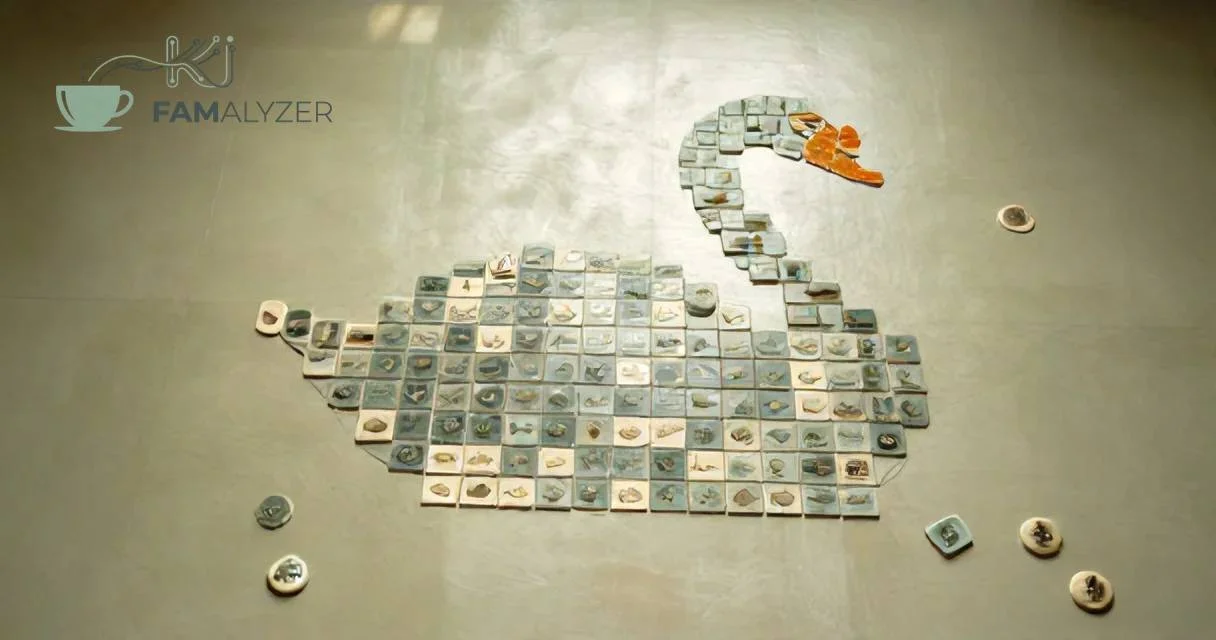
Imagine an AI is shown millions of images. Some show swans, others ducks, geese or different animals.
At the start, the AI recognises nothing at all. To it, every image is just countless pixels.
During training, though, it analyses the same features over and over. It notices that swans often have a long neck, a particular body shape, a typical beak shape and frequently white plumage. At first it might still confuse a swan with a goose, but after a great many examples a pattern emerges.
When a new image comes along later, the AI doesn’t check whether it “knows” a swan. Instead it compares the features of the new image with the patterns it has already learned. If the new image matches the known features well enough, the AI says: “This is very probably a swan.”
The important part: the AI doesn’t know what a swan is. It has never seen, heard or experienced a swan. It’s only recognising a pattern in the data.
Recognising patterns in language: the handwriting example
Learning from text works in much the same way.
Imagine an AI is given thousands of handwritten words from different people. Some write the “A” rounded, others angular. Some use cursive, joining the letters together, while others use print, writing each letter separately. Some write very neatly, others rather messily.
That can be a problem for people too, but we usually recognise the words anyway. An AI, however, has to learn that recognition first. To do so, it analyses enormous quantities of examples. Over time it identifies typical patterns and connections between the different ways of writing. That’s what later allows it to read handwriting it has never seen before.
The same applies here: the AI doesn’t understand the meaning of a word the way a person does. It only recognises which shapes and characters very probably belong together.
Incidentally, the same principle sits behind ChatGPT.
The model has analysed billions of texts and learned patterns in language from them. It knows which words often appear together and which answers are likely to follow particular questions.
Recognising connections: the weather example
It gets especially interesting with predictions.
Let’s say an AI is given weather data from the past few decades. For each day it sees information such as:
- temperature
- air pressure
- humidity
- wind direction
- cloud formation
It also knows the actual outcome:
- sunny
- cloudy
- rain
- thunderstorms
The AI analyses millions of such records. Over time it identifies certain connections. It notices, for example, that rain often occurs when air pressure falls, humidity rises and particular cloud shapes appear.
Now, when current weather data is entered, the AI compares it with the patterns from the past. It isn’t reasoning like a meteorologist and knows nothing of raindrops. It doesn’t understand why rain forms either – it simply recognises that similar combinations of data have often led to rain in the past.
That’s why what an AI is really saying isn’t “It will rain tomorrow”, but rather: “Based on the patterns I’ve learned, rain is very likely.”
This exact principle also sits behind many AI systems.
Why this matters for parents
This is one of the most important points about dealing with AI. Many people believe an AI possesses knowledge the way a person does, but in reality it works with patterns and probabilities.
That also explains why AI often delivers impressive results. It has learned from vast amounts of data and can therefore give remarkably good answers. But this is also where its greatest weakness lies. The AI doesn’t check whether a statement is true. It calculates which answer is most likely to fit.
In most cases that leads to good results – but sometimes it also produces answers that are very convincingly phrased yet turn out to be wrong once you check the facts.
This is especially important for children to understand. A well-phrased answer is often automatically taken to be correct, yet an AI can make mistakes too, mix up information or invent things. That’s why AI should always be used as support – not as an infallible source of knowledge.
When researching, always ask it to show you the sources it used, and check important information separately as well.
What parents should take away
An AI doesn’t learn through its own experiences. It doesn’t understand the world the way we humans do; it recognises patterns in images, language and data and calculates probabilities from them.
That’s precisely why it can be incredibly helpful and occasionally completely wrong at the same time.
Once you understand that difference, you can support your child far better in using AI safely and responsibly.
Coming up in the next post
In the next post we’ll look more closely at why AI sometimes invents answers that sound utterly convincing – and why experts call these “hallucinations”.