

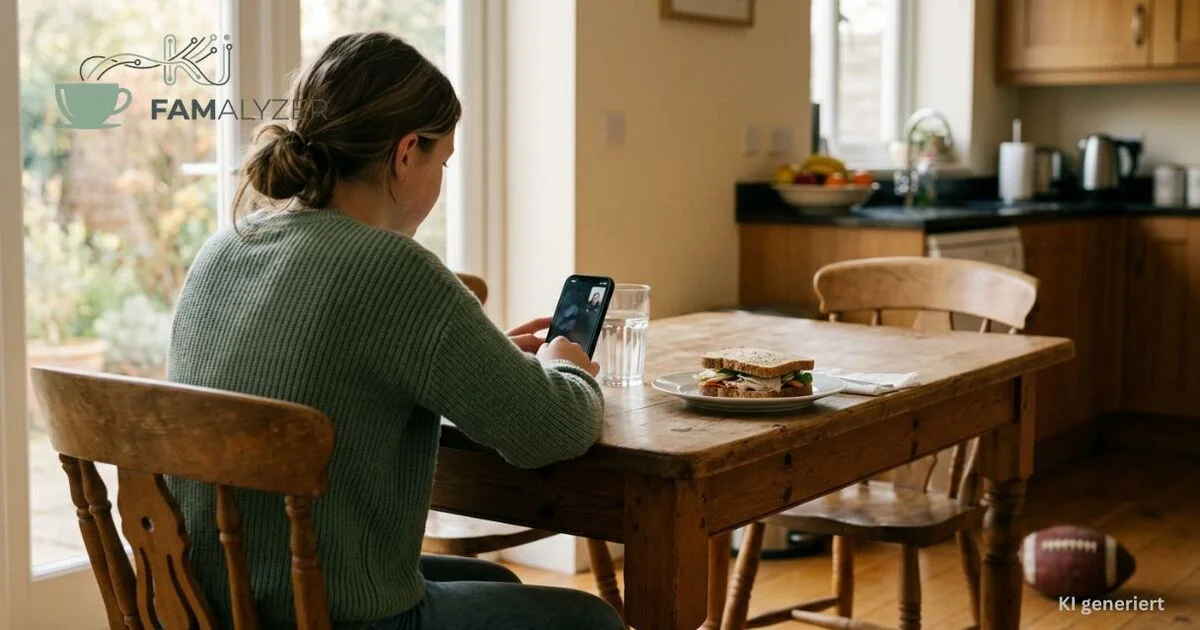
Austria wants to ban social media for children under 14, but the EU has put the plan on hold for now. The debate is raging again. But while everyone is talking about TikTok and Meta, a very different question is on my mind: what about AI chatbots?
I can well understand why many parents would welcome a social media ban. Clear rules at last! No more arguing about how long the child is allowed to be on their phone.
But would that really solve all the problems?
Less TikTok – but more ChatGPT?
I’ve just listened to an interesting podcast from DER STANDARD, published on 23 October, so only a few days ago. The communication scientist Hajo Boomgaarden talks about how social media work and why they can be particularly problematic for young people.
One point stood out to me: according to the Youth Internet Monitor, young people’s use of some social media platforms has declined compared with the previous year.
That sounds encouraging, doesn’t it?
Well, it doesn’t automatically mean that young people are spending less time with digital media overall. Perhaps their use is simply shifting – to AI chatbots such as ChatGPT, for example.
But it brings me to a question: is ChatGPT really less of a problem for our children than TikTok?
When the AI becomes your best friend
With social media, we now know (even if it took a long time) what to look out for. We talk about addictive features, unrealistic beauty ideals and problematic content. But what happens when young people start discussing their personal problems with an AI?
A chatbot always has time. It replies kindly, seems to understand, and can even appear to be genuinely interested in us.
There are now dedicated AI companions designed precisely for such personal conversations. For young people that can be more than tempting. Especially at an age when friendships, recognition and their own identity play a big role – and when they need companionship for exactly that – we parents should pay close attention to whom they turn for advice.
Of course not every conversation with an AI is dangerous. But what if a young person starts confiding in the AI rather than in real people? What if they rely on advice that sounds convincing but isn’t necessarily right?
And we haven’t even talked about the long-term effects AI will have on learning and thinking skills. Because that’s an area where we don’t even know enough yet to be able to discuss it much.
What I’m getting at: unsupervised AI use by children and young people is something we should discuss at least as intensively as the risks of social media.